Chinese Herbal Medicine: Root and Branch 7642 SW Capitol Hwy Portland, Oregon 97219 (971) 288-5939
Physical Therapy: These folks go beyond the usual “MORE STRENGTH!” approach to address neurological function, fascia, etc. IPA Physio (503) 616-0313 7412 SW Beaverton Hillsdale Hwy #110 Portland, OR 97225
Podiatrist: Dr. Ray McClanahan Northwest Foot & Ankle 2701 NW Vaughn Street, Suite 424 Portland, OR 97209 (503) 243-2699
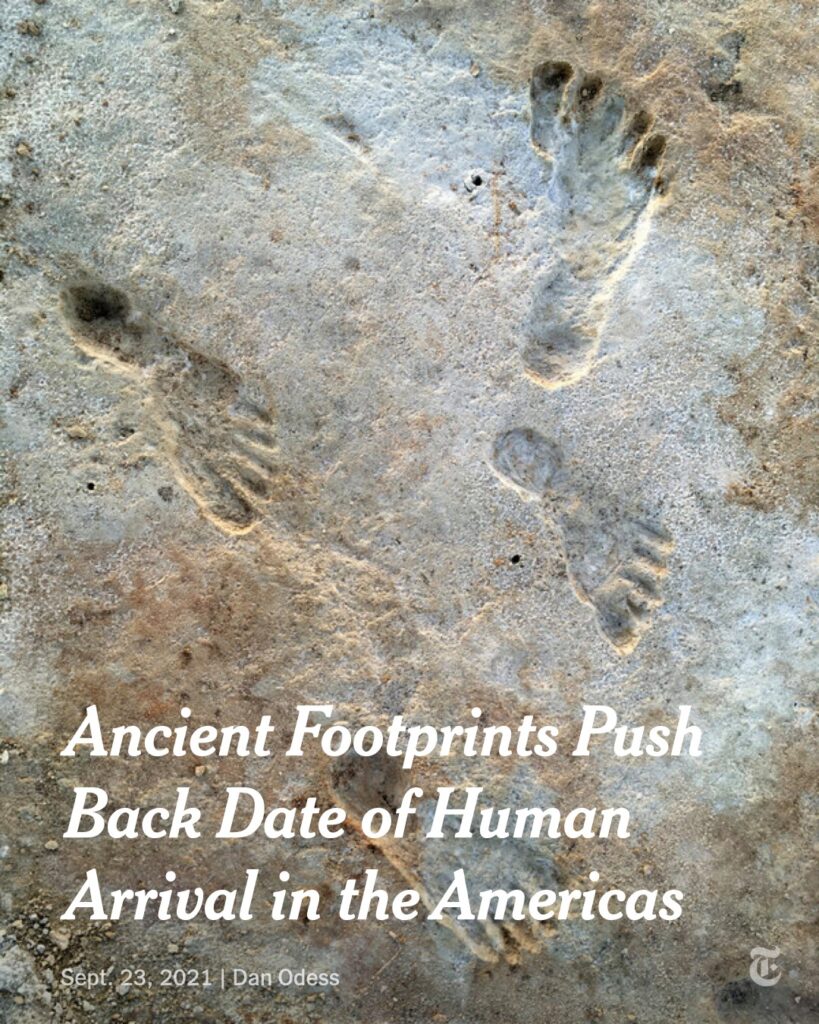
In the past, before we invented stiff and constraining shoes, our feet looked very different. Here’s a fascinating article about natural feet, and how they work when not trapped inside restrictive shoes. Our feet change as footwear styles evolve. You may feel like you need arch support or a “good sturdy shoe” because that’s what you’re used to: Your feet have been slacking off and letting the shoe do the work, so they are weak. Just like any other deconditioned muscles, they can be re-trained to be strong and supple, by doing exercises and gradually transitioning to minimal shoes.
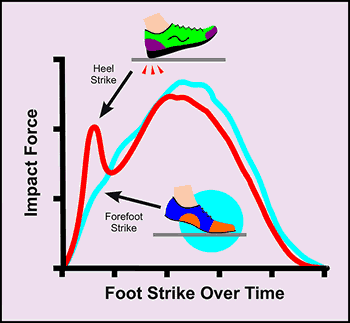
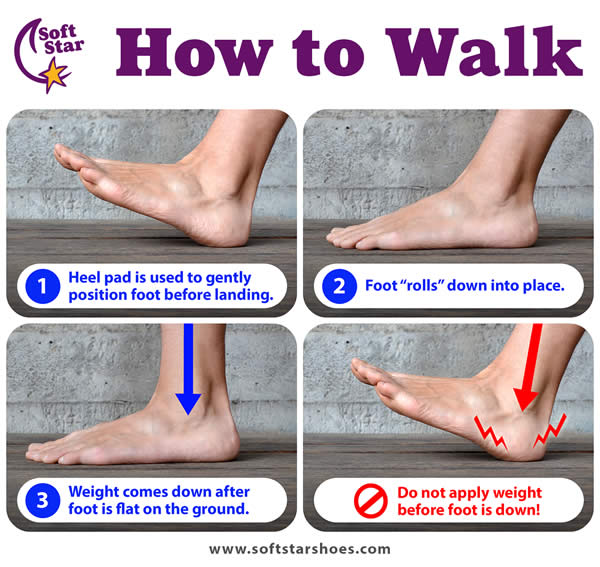
A long, long time ago, humans evolved to walk barefoot. We did just fine until we started wearing stiff, supportive shoes. Stiff shoes actually encourage a different gait – striking on the heel instead of the ball of the foot. Without the muscle of the foot softening the landing, more impact jars the body, from the ankle up to the spine.
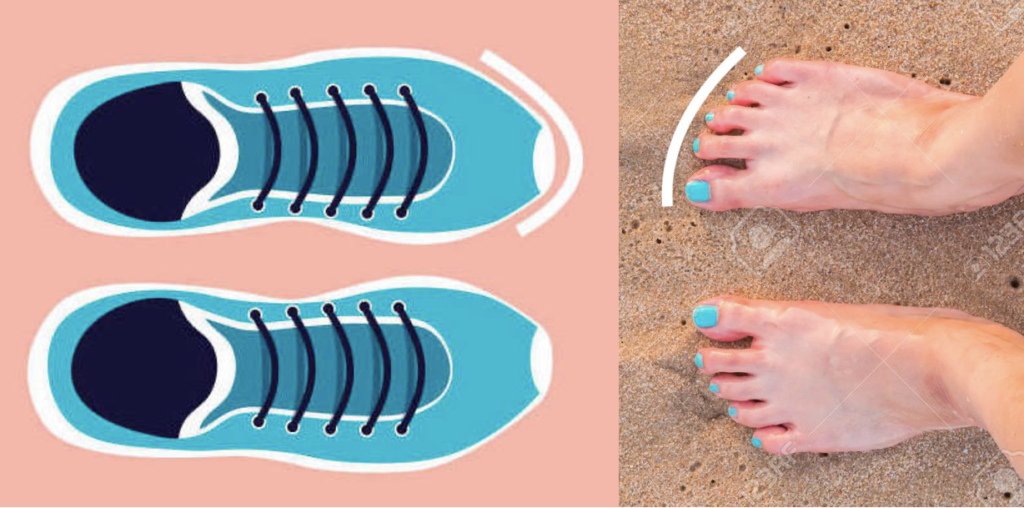
It’s possible to retrain yourself to walk like an Egyptian (er, a pre-modern human), but it definitely takes some practice. The two graphics above are by Softstar. Their completely minimal shoes are fantastic once you have built some strength and flexibility in your feet (exercises here), but I do not recommend switching to them just yet if you’ve been wearing very stiff / supportive shoes. That’s like asking your couch potato feet to run a marathon, and injuries can happen! Note: I am a huge fan of Softstar Shoes, but they are not appropriate for everyone. If you have damage to your feet, extra weight, or spend a lot of time on concrete, you’ll need a little more support / cushioning.
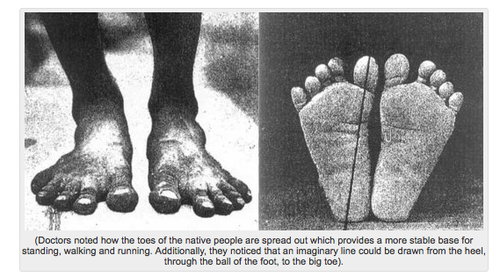
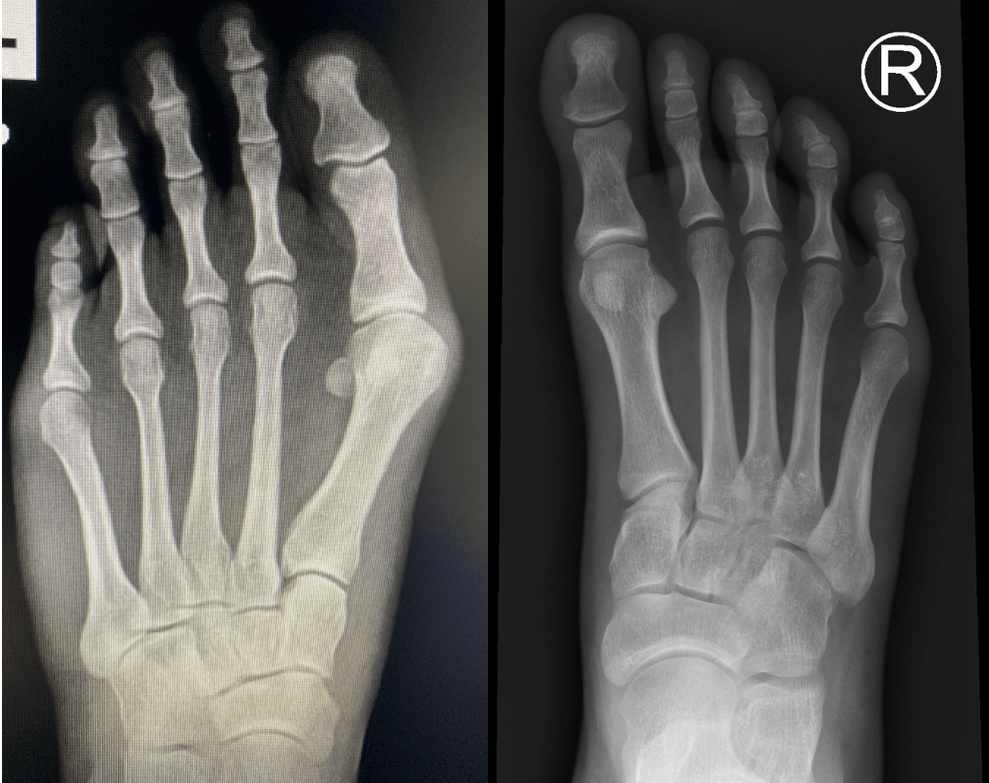
The problem is compounded because we decided to make shoes not shaped like feet, for some strange reason. Compare these pictures, and see if you can spot the problem:
Modern shoes are shaped as if our third toe is the longest, but it’s always our 1st or 2nd that need the most room. Eventually, the feet will be deformed to match the shoes. The bones of the great toe, lacking the room to reach forward, will escape sideways. I see this a lot with tall men who went through a growth spurt as a teen and didn’t immediately get new shoes.If you’ve had this problem your whole life, it’s probably due to overly tight baby shoes or outgrowing your footwear as a kid – studies of “familial” bunions that looked at baby footprints generally showed that patterns of behavior were inherited, not bad feet.
Reach down and wiggle your great toe. If it is rigid and can’t get back to a natural position, it may be too late. But if it moves, we can still retrain the muscles and tendons to get your foot back to health.
WHY THIS MATTERS– YOUR GAIT AFFECTS THE REST OF YOUR BODY!
This is not just an aesthetic issue! Your toes are supposed to be doing a lot of balancing work for you. If they are bound up, all that work gets pushed up the chain, affecting ankles, knees, hips, and even the lower back. I’m NOT saying your tight shoes caused your back pain, but they definitely contributes to a complex set of issues, and they slows down your recovery.
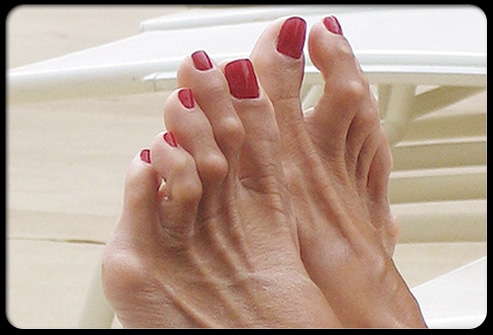
Hammertoes form for the same reason – not enough room in the toebox. After being squinched up for a while, the tendons shorten and the crimped posture becomes that foot’s default. But we can reverse that with acupuncture, medical massage to break up fascial adhesions, and gentle daily stretching.
Please let me help you liberate your toes! I can teach you self-massage, fit you for a set of Correct Toes toe spreaders, and modify them to fit you, if necessary. Of course I can also provide gentle acupuncture and advanced medical massage to get you back to optimal performance as soon as possible! :)
How about a private massage class for two? Learn how to ease each other’s pain and feel great! No experience or anatomy knowledge required. I’ll customize the session for your needs. ScrolI down to the bottom of the booking page to choose your time slot.
I also have pretty gift certificates to give to your sweetie… or hint to your love that’s what you’d want… Available in any denomination or for any service – the perfect Valentine’s gift!
To make it extra easy, I can take Zelle, PayPal, and Venmo. I can also email you an invoice that’s secure and payable by credit card, or you can swing by the office.
If you have osteo-arthritis, an inflammatory disease (Fibromyalgia, IBS, etc), or unexplained issues, listen up: There are ways to alter your diet that will help decrease your pain! It’s also very helpful when you want to reduce inflammation after an injury or surgery. Even if you don’t want to make permanent life changes, following these guidelines when you are having a particularly bad time will help.
1) Avoid sugar. This includes soda* and high-glycemic foods that will break down quickly into sugars. White bread, pasta, and starches will all contribute to inflammation.
2) Avoid fried foods. Enough said.
3) Grain-fed red meat is a problem for some people. Grass-fed meat is less inflammatory, since the fat structure is different.
4) You can counteract pain by eating ANTI-inflammatory foods. Dark leafy greens like kale and spinach will help a lot. Berries (except for goji and blueberries), turmeric, garlic, celery, pineapple, cocoa, ginger, and foods containing good fats (extra-virgin olive oil, coconut oil, avocado, salmon, nuts & seeds) are great, too. If you are sensitive to oxalates, however, be careful not to overdose on the dark leafy greens.
5) Foods your body doesn’t like. More and more, I’m seeing personal sensitivities to foods that are healthy for others. In particular, women past menopause seem to develop food allergies. This can be a delayed response, so it’s hard to recognize. Reactions to dairy or wheat, for example, are pretty common. I’ve also seen legumes, eggs, oats, soy, and even vanilla. Every body is different. Inflammation in the gut will encourage inflammation all over the body.
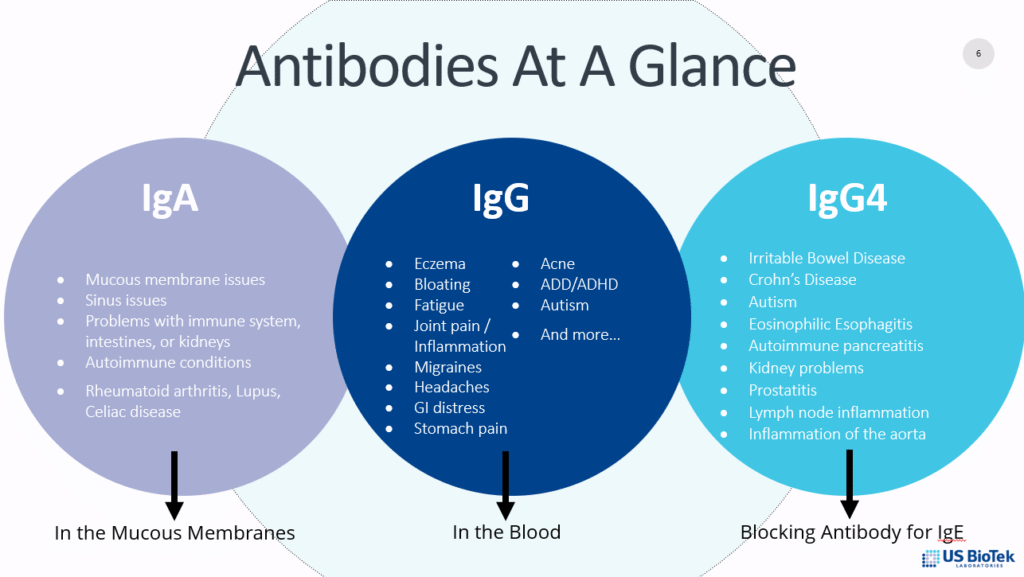
My IgG reaction, for example, shows up wherever I have arthritis. For me that’s my hands and lower back, and I very much feel the difference the next morning. This doesn’t mean you have to give up the problematic food forever! You can pick your battles, and choose when it’s worth it. The best news is that – because allergies are your immune system over-reacting to a benign substance – in some cases, avoiding a particular irritant can correct the overreaction and “heal” the allergy over time! Acupuncture helps speed up this process.
The changing, adapting nature of our immune systems also means that a test more than 2 years old should probably be repeated to identify new triggers. Most MDs only test for IgE, the deadly anaphylaxis type of reaction. These three above are more subtle, but can make you miserable.
You can skip testing and do an at-home elimination diet, but that requires a serious commitment. You can also keep a spreadsheet of everything you’re eating, and track your symptoms, to find patterns. I like putting foods down the side, and dates across the top. As I eat something, I check off the box for that ingredient and that day. Since mine manifests as joint pain the next morning, I get up and color code the previous day: White for no pain, pale yellow for a twinge, yellow for moderate achiness, red for pain. After a few weeks I could look back and see which foods were causing trouble. This is what worked for me – you should use whatever format works for you.
I now also have access to blood testing (we prick your finger in the office and send off a blood spot card) that can identify which foods you’re reacting to. It’s not cheap, but it’s incredibly helpful and much easier / faster than a thorough elimination diet. Finding out all the foods that were causing trouble has eliminated my daily pain!!
I tried going off wheat and dairy for a month last year, and didn’t see a difference, so I went back to them. It turns out I was also having an inflammatory reaction to eggs and oats, which were my usual two breakfast options. Cutting them all out (in addition to the nightshades I had already banned) made a stunning difference. In three days, my extensive joint pain just evaporated. I’m pain-free for the first time in decades! I’m NOT saying everyone needs to avoid all these foods: This was how my body was reacting. You may have fewer allergies, or none at all.
After two months of eating a strictly anti-inflammatory diet, I had a weekend camping with friends, full of wheat and dairy, and still felt great. The pizza I had Sunday evening pushed me over the edge though – Monday morning my hands and lower back were definitely speaking up. I expected that would happen, and made a quality of life choice to enjoy that pizza! And yes, it was totally worth it.
6) The Nightshade (Solanaceae) plants contain a small amount of an alkaloid toxin called solanine. Some people aren’t bothered by it. Other people, especially those with auto-immune issues & arthritis, tend to be sensitive to this family of plants. Most are unaware of the pain they are causing themselves, because they eat them so often, and because the inflammation & ache are delayed up to 24 hrs.
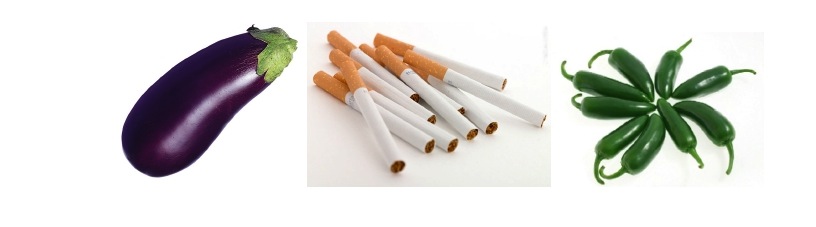
Tomatoes Potatoes (Sweet potatoes and yams are ok) Peppers, including spicy, chili, and bell peppers, and paprika (Black, white, and green pepper is ok- it’s actually a peppercorn. Long pepper is ok, too.) Eggplant Tobacco
Although less well known, Goji berries and gooseberries are nightshades, too.
Note: Blueberries, huckleberries, artichokes, cherries, apples, sugar beets, and okra are not in the Nightshade family, but they also contain solanine.
The good news: It’s very easy to find out if you are Nightshade sensitive. Simply remove all of them from your diet for two weeks You’ll have to read labels carefully. “Spices” may contain paprika, and lots of prepared foods like shredded cheese can contain potato flour, labelled as “cellulose.” After two weeks of avoiding them, have a big dose. Enjoy that eggplant parm with marinara sauce, a pile of potatoes, or drink a V8. See how you feel that evening and the next day. If within 24 hrs your pain is worse, you are Nightshade-sensitive. Wherever you have inflammation, that’s where it will show up. If not, congrats – you can go back to all the tomatoes you want.
The alkaloid is degraded by extreme heat. Deep-frying will destroy solanine … but fried foods are inflammatory for other reasons, so don’t get too excited. I will eat a small amount of potato chips on a special occasion because they are fried all the way through, but not french fries, since they are still squishy in the middle.
The combination of Nightshades and sugar is a doozy. I can get away with a small amount of tomato paste, but even a tiny squirt of ketchup used to make my hands ache the next day.
Following an anti-inflammatory diet is a relatively simple way to decrease your pain and make a real difference in your quality of life. Some people have inflammatory reactions to dairy or wheat, and that may be worth testing the same way as the Nightshades. You don’t have to be perfect all the time – just make conscious choices.
Spicy food junkies: Fear not! You can still enjoy horseradish & wasabi, onion, garlic, ginger, and all the peppercorns, including long pepper.
Here’s a nightshade-free curry recipe and one for NonNightshade Mexican. Substitute either cauliflower or sweet potatoes for regular potatoes. Pizza and pasta are great with pesto sauce. There are wonderful southern vinegar-based BBQ receipes. There’s even a “No-Mato” marinara sauce I found online (OMG SO GOOD!!!! I used the higher levels of spice for everything and loved it! If you use all regular beets it’s purple. If you use 50% regular beets and 50% golden beets, you’ll get a red sauce with a less “beety” taste. Freezes well, too!).
UPDATE: Now that I’ve been Nightshade-free for a while, my sensitivity has decreased drastically. There seems to be a cumulative effect. By staying away 99% of the time, and preventing a build-up of inflammation, you can enjoy the occasional indiscretion. This is more and more true as time goes on! Now, I can “cheat” about once a week without effect. I can even indulge in big naughtiness once in a while. Be patient!
*Diet soda isn’t a good solution. While it doesn’t contain sugar, the artificial sweeteners cause their own problems, including triggering the body to start storing more calories as fat.
Robert and I traveled to Japan in September. As a frequent world traveler, I strongly recommend it! The people were wonderful, the architecture fascinating, and of course the food sublime.
I just spent 11 days in Thailand, exploring the culinary and architectural wonders, and of course absorbing everything I could about medical massage. I booked 5 bodywork sessions, and would have done a 6th, but I got a head cold at the end and wanted to self-quarantine as much as possible.
Here’s a quick summary of my thoughts – if you’re interested in more detailed descriptions and analysis of each session, that will follow below.
I was expecting the type of Thai massage where the practitioner moves and stretches you, turning you into a pretzel with the goal of increased range of motion. I did experience a bit of that, but mostly the focus seemed to be on very aggressive blasting of muscle and fascia. The first session, at the national center of Thai massage education at Wat Pho in Bangkok, was particularly brutal. My legs were covered in bruises afterwards. I don’t know if it was that she was a student, or that’s what they are teaching, but my travel buddies had similar experiences and bruising. Over the course of the hour-long foot and leg massage, she didn’t seem to have any awareness of what was happening in my body or the underlying anatomical structures. She worked away, performing her set order of techniques at full power, ignoring my flinching as if I were an inanimate object. Later sessions with more experienced professionals gave me a sense of better sensitivity (what my doctor ex-husband and I used to call “good hands”), but everyone used the same set of techniques in the same order.
Acupuncture license renewed! This year the Oregon Medical Board required everyone to take an online course on “Changing the Conversation on Pain,” which was as cheesy and awkward as you’d expect a state government-produced video to be, but contained excellent information on how mood, nutrition, movement, social contact, and cultural factors (stress / bad care from racism, etc) can impact chronic perception of pain. They even covered neuroplasticity (how the brain changes) and becomes “better” at creating pain. By understanding the how and why of this, we can stop the ramping up and quiet the alarm bells. This both reduces the amount of pain you perceive in the moment, and allows the movement you need to heal. This is all stuff I’ve learned before, but I’m super excited the OMB is forcing ALL practitioners to hear it, because based on what my patients tell me, most docs are still just pushing drugs and PT.
I’ve lived this personally – you feel lousy, so you quit moving, eat garbage, and watch TV. Then you feel worse and the cycle continues.
Instead, making small incremental changes (some stretches, an apple instead of chips, shifting your internal monologue) can literally reduce how much pain you experience… which frees you up to move a little more, cook something, see a friend… and you feel slightly better! Gradually, you start the cycle towards improvement. I’m NOT saying smile and ignore it – pain is real! But making these adjustments will retrain your brain. Every little bit helps.
There’s a website with tools for both practitioners and for patients, in English y español.
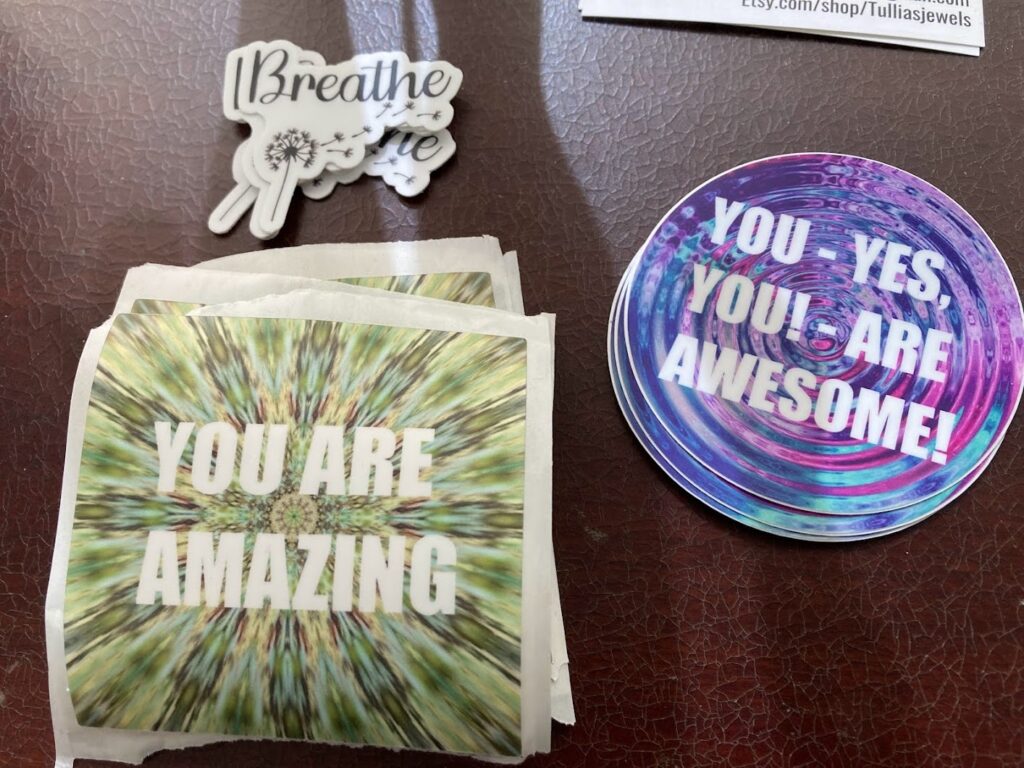
I love teaching self care. I can do great work here in the office, but long term change usually goes better if you do your homework. Sometimes that’s stretching, postural correction, or checking in with your body and releasing tension (usually a combo of these). Of course, the trickiest part of learning a new habit is remembering to do it, so I like providing visual reminders. I have this fun selection of stickers for my patients to chose from. I recommend putting them at your work station or on a water bottle… anywhere you’ll see it frequently.
My newest one – arriving soon – says “I hope something good happens to you today.”
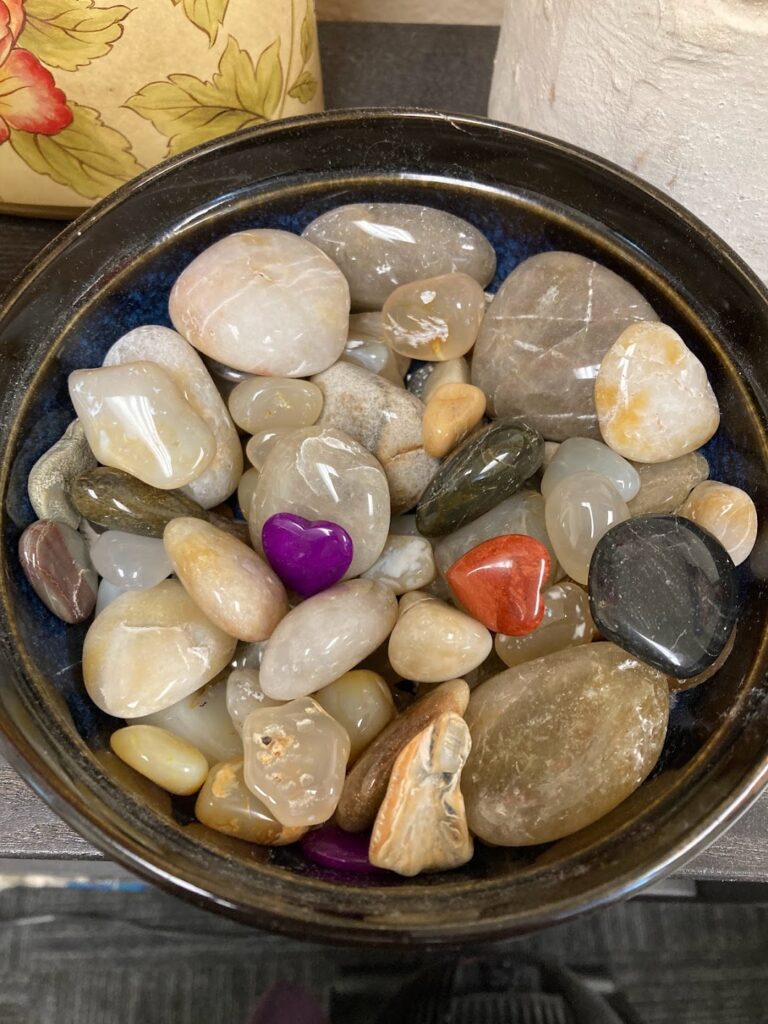
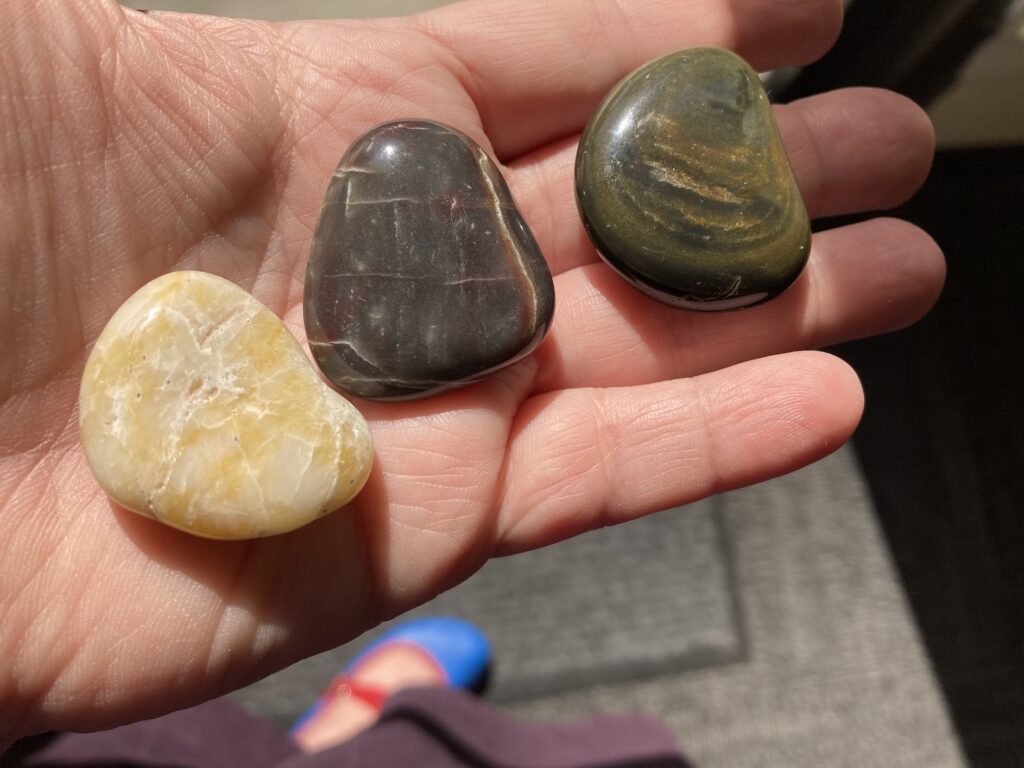
Since some people are more tactile than visual, I also have pocket rocks to give you! Thanks to my friend Diana, I have lots of fascinating Oregon rocks she’s found and tumbled, in a variety of sizes. People like to give me rocks, and the ones I can’t use for jewelry often end up in the pocket-rock bowl.
Oregon agates, jaspers, even some shell! Which one speaks to you?
When a patient arrives for an appointment, I always ask if they need to use the bathroom. It’s better to get that taken care of before they are undressed and full of needles! One lady responded “When do I ever NOT need to?” with a laugh. I giggled with her, agreeing wholeheartedly. Then it occurred to me…that’s not normal!
Over the years it snuck up on me, and I hadn’t even noticed… just cracked jokes about having the world’s tiniest bladder, etc. I was getting up to pee at least once a night, and up to three times on a bad one. Frequent urination is a pretty common situation with more mature women, especially those who are heavier or had children, but that doesn’t mean I had to be stuck with it!
There are two issues here – urgency and incontinence. I did some reading, and some thinking, and here’s what I came up with:
URGENCY:
There are two warning systems for your bladder. One triggers when it starts to fill: That’s the early notification, “Hey, start thinking about a biobreak?” Then there’s the demanding “NO, REALLY!! FIND A BATHROOM NOW!” when it’s completely full. Apparently if you always relieve yourself when the first alarm goes off, the two start to merge, and the urgency gets ramped up even at the early stages. The best way to combat this is to deliberately delay at the first warning. Distract yourself. Do something engaging so you forget you need to pee. When I first started doing this, I couldn’t put it off for long… maybe 5 minutes. But soon it became an hour, and then two! The trick here is to relax. When you feel that sudden NEED to go, the tendency is to panic, to squeeze your legs and try to hold it in while rushing to the toilet. Unfortunately, that’s just going to push it out! Instead, think about consciously relaxing your abdomen, pelvis, and thighs. Focus on your work or something else (maybe as you make your way to the bathroom, in the early stages). It can be a bit of a roulette at first, but keep with it! Retraining takes some time.
Secondly, I don’t know about you, but I have a tendency to always be in a hurry. I was squeezing and firing off a pressurized firehose out of some misguided attempt to “be efficient.” This led to a buff bladder that was prone to “going hard” when activated. Instead, I made a conscious effort to relax when peeing, and just let it stream.
INCONTINENCE:
Pelvic floor health is super important. We’ve all heard of Kegels, and some docs recommend doing them while brushing your teeth, just to make it a frequent habit. Likewise, sexual activity and orgasm (alone or with a partner) can help get those muscles strong and healthy.
Absorbent “period panties” can be useful for containing small leaks. Thinx, TomboyX, and plenty of other brands make use of new fabric technology. These garments are machine washable (hang to dry) and, while the crotch panel may be slightly stiffer than usual undies, they are comfortable. They can be useful in the training period while challenging yourself to hold out. In worst case scenarios, if you are unable to retrain, they are a more dignified option than adult diapers. In the long run, they are cheaper, too.
RESULTS:
Obviously, your mileage may vary, but I started seeing changes pretty quickly. A month after I started my experiment, I slept through the night! It’s now been three nights in a row, and one was a 10 hr lazy sleep-in over the weekend.Sleep is sacred, and anything you can do to improve your slumber will have a positive impact on the rest of your day.
Another important benefit to reducing overactive bladder symptoms is the freedom to have a drink of water. I know far too many women who stay perpetually dehydrated because they are nervous about their frequent urination. Take your control back by learning to relax… it may sound counterintuitive, but it’s working for me. Let me know how it works for you!
UPDATE 12/23/22: The retraining held until I rediscovered tea. It turns out caffeine brought back the frequent pit-stops for 24-48 hrs. I do just fine on herbals and still sleep through the night! :)
Postscript 4/6/23: It occurs to me that there’s a connection between general stress / anxiety and overactive bladder issues. If you find yourself in “fight or flight” mode often, it’s worth taking a slow, deep breath… one more… give yourself a moment to relax. We weren’t meant to be on high alert all day. I do a lot of “rest and digest” mode coaching with my patients. Please let me know if I can help you with that!
2026: If the retraining above doesn’t work, you might need some pelvic floor physical therapy. Talk to me about exercises and a great practitioner!
First – the basics. There are two major types of active chemicals in marijuana. THC gets you high, and is federally regulated. CBD doesn’t, and isn’t. With CBD there’s no high or sleepiness, and with the sublinguals (liquid you drop under your tongue) you don’t get that weird feeling that edibles can create. It’s amazing for nerve pain and anxiety. Another reason I prefer the sublinguals to edibles is that they take effect within minutes, instead of hours. That also means it’s easier to dose: You can try a small amount and increase as needed with very quick feedback.
I did a lot of research before I decided which brand of CBD supplies to carry… The vast majority of products out there are low potency, low quality, and are in a cheap substrate (base) which means they don’t absorb well. Please don’t buy your medication at a grocery store, head shop, or gas station!
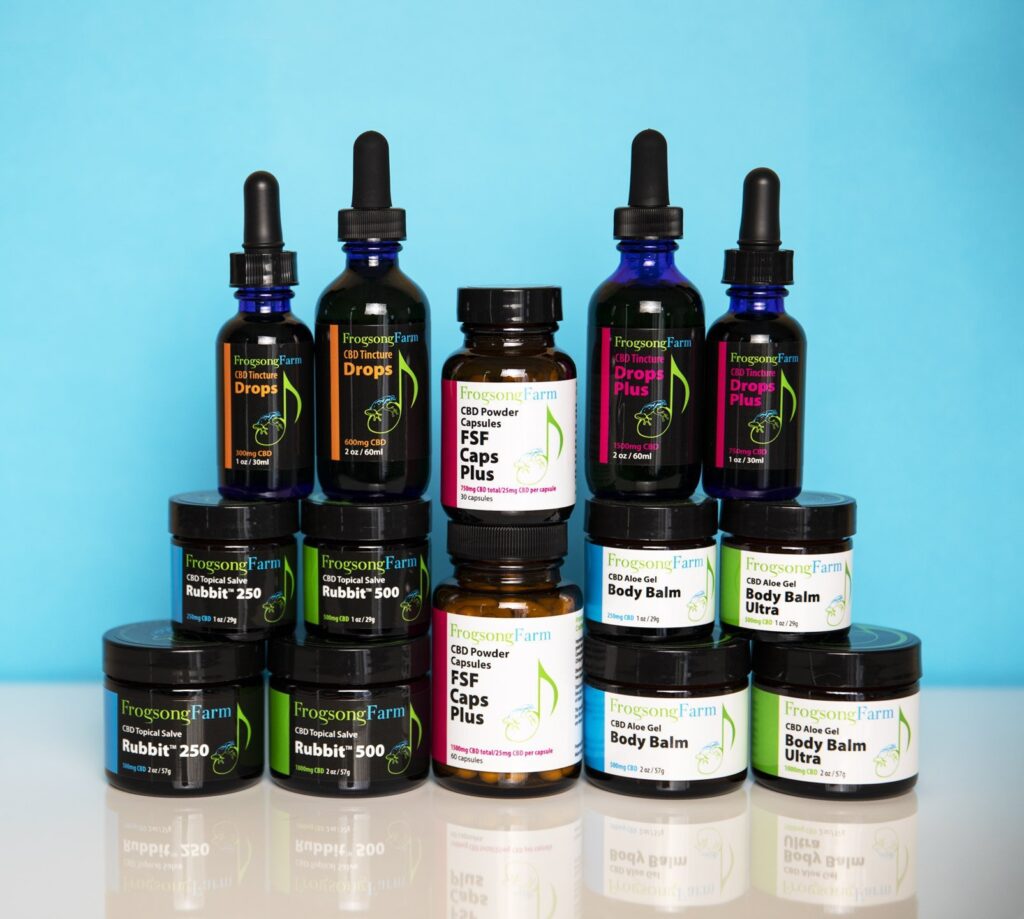
I started carrying Frogsong in 2018. This is a local family company run by some really terrific people. They actually derive their CBD from hemp. From them, I have:
Drops: Sublingual tincture, best for anxiety and all-over pain, like Fibromyalgia or widespread arthritis.
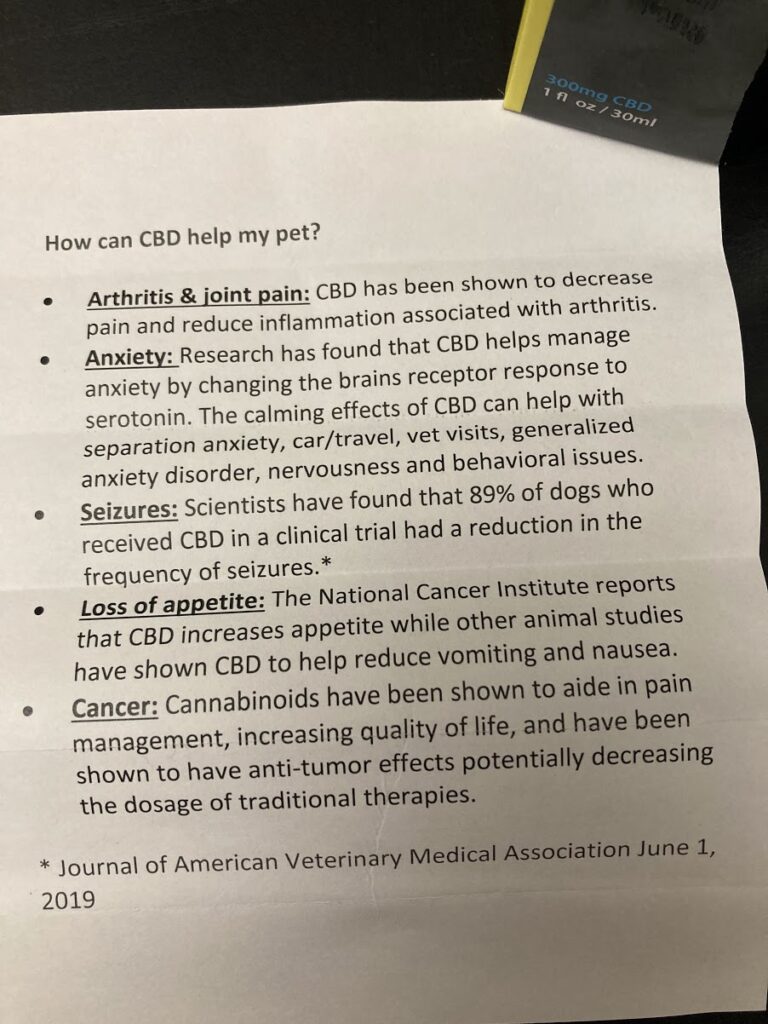
Drops for Pets: Frogsong is now offering a version for fur babies, too! You can put it in their food, or have them lick it from your hands. I used to dose my critters with Rescue Remedy by putting it on their ears for quick absorption with no hassle. I believe this will work for the CBD Drops as well. The packaging contains dosing instructions, and this information:
Body Balm: A light, lemony, aloe-based gel that absorbs quickly into the skin.
Rubbit: A heavier, moisturizing, minty salve. Fantastic for foot neuropathy or any place your skin needs a little extra help.
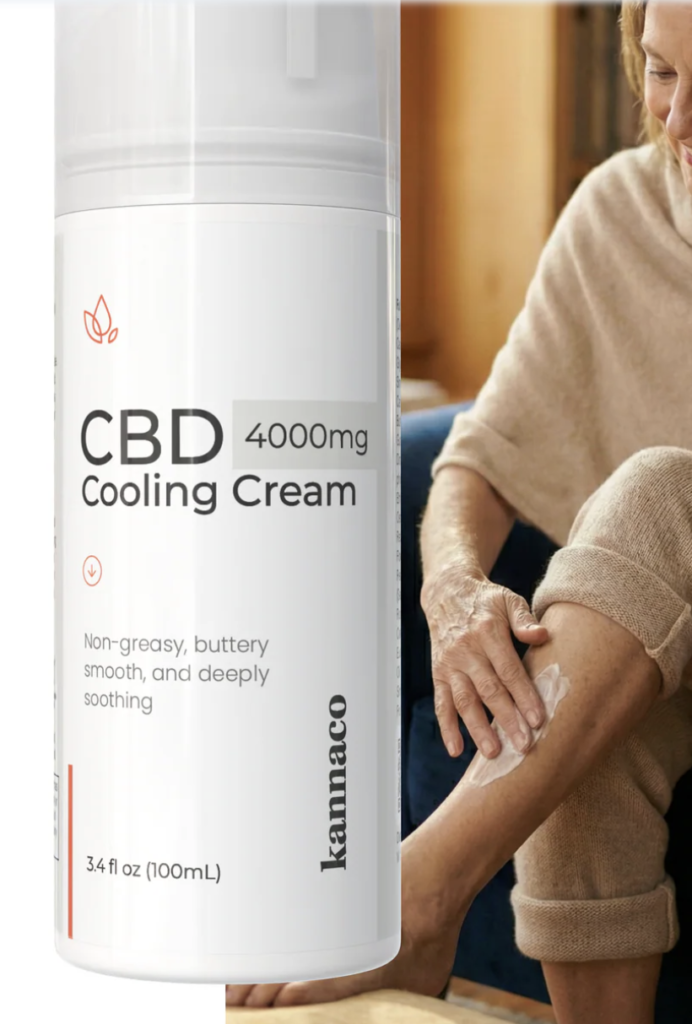
I also carry Kannaco. They offer a topical CBD salve with menthol (nice for immediate pain relief) and Snooze Sleep Aid, a capsule with CBD and melatonin. My patients have been reporting excellent results with both.
Note: CBD is generally regarded as safer to combine with prescription medication than THC, but you should talk to your doctor if you have a question about drug interaction safety. I have a Master’s Degree in Acupuncture and Oriental Medicine, but I’m not a doctor and pharmacology is not my area of expertise.
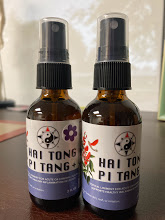
If you prefer to avoid CBD, I still have the ever-popular anti-inflammatory Hai Tong Pi Tang, or “pancake spray” – named for its distinctive maple syrup scent. I’ve been using this for a decade on sore joints, sunburns, etc. and am always amazed at how powerful this ancient Chinese herbal formula can be. And if breakfast food perfume isn’t your thing, I also have a lavender version.
Feel free to ask me about any of these pain-relief solutions. I am happy to use the topicals on you during your treatment, so you can see if they work for you.